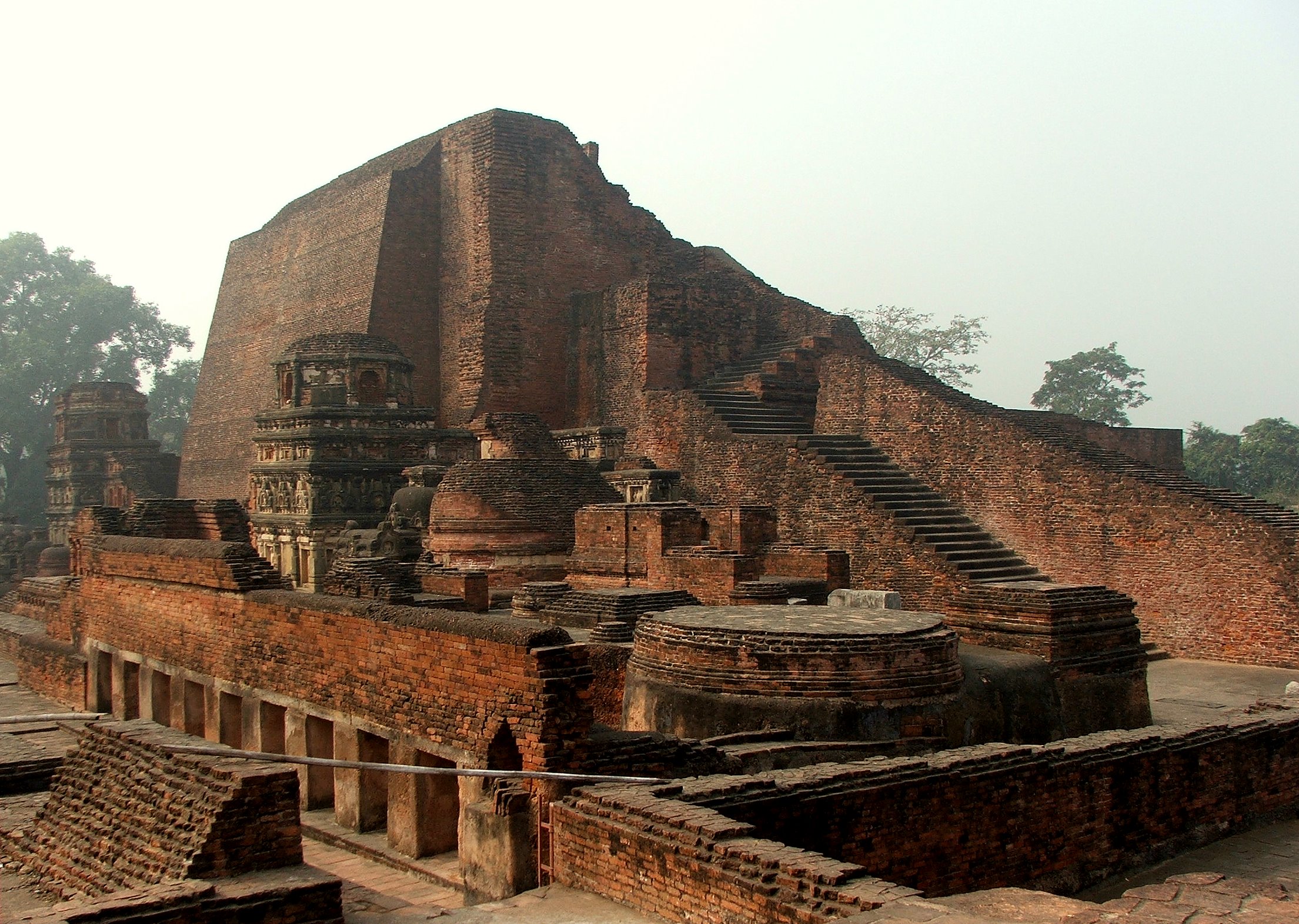
Nalanda asks visitors to imagine a working institution from what survives at ground level. Brick walls define rooms, passageways connect open spaces, and larger sacred structures rise above a carefully arranged site. At first glance, the repeated outlines can seem difficult to read. With a little context, they begin to suggest how learning, residence and religious practice once shared a landscape.
The archaeological site is distinct from modern institutions that also carry Nalanda’s name. When arranging transport, specify the ancient ruins or Nalanda Mahavihara archaeological site. That simple clarification helps avoid an unnecessary detour and makes it easier to plan nearby visits.
Begin with reliable historical context
UNESCO describes Nalanda as a long-lived monastic and scholastic centre, with major development from the fifth to the thirteenth centuries CE and earlier remains within the site. Its significance includes both the transmission of knowledge and the architectural organisation of religious and residential life. The World Heritage description is a concise, reliable introduction.
It is tempting to explain Nalanda through a handful of dramatic claims about enormous libraries or a single catastrophic event. Such stories need context and evidence. Let the surviving structures and interpretation panels lead your understanding, and ask a guide to distinguish archaeological findings from later traditions. The history is rich enough without presenting every repeated legend as a settled fact.
Learn to recognise the layout
Before walking quickly to the largest structure, pause at the site plan. Identify the broad relationship between monasteries, courtyards, shrines and paths. Then choose one monastic area and study it slowly. Look at the position of entrances, the rooms opening around a shared space and the way circulation would have worked.
This approach helps transform a field of walls into a place of daily routines. Where might people have gathered? Which spaces feel communal and which feel enclosed? Keep these as questions rather than claims about a particular room unless the site’s interpretation confirms its use. Curiosity is more useful than confidently assigning a story to every doorway.
Give the visit a clear sequence
A manageable visit has three parts: orientation, an unhurried walk through the excavated remains and time to reflect on what you have seen. If a museum visit is part of your plan, check its opening arrangements separately; nearby attractions do not necessarily follow identical schedules. Avoid letting the drive consume the time intended for the site.
A guide can be especially helpful here because the surviving walls are less self-explanatory than an intact building. Agree on the scope and fee before starting, and ask for an explanation of the layout rather than only a series of names. Leave time afterwards to revisit a section independently.
Photograph the site without flattening it
Wide photographs help show the relationship between the structures, but repeated views from the same height can make every area look similar. Combine a broad frame with a closer study of brickwork, steps or a permitted path through the ruins. Side lighting may reveal texture, while a cloudy day can make details easier to read without harsh shadows.
Stay behind barriers and on routes open to visitors. Do not climb ancient masonry to create a higher camera angle or move loose material for a cleaner composition. The site’s value depends on the survival of its fabric, including details that may appear ordinary to a casual visitor.
Build a comfortable day around the ruins
- Allow walking time: The site should not be treated as a brief roadside photograph stop.
- Prepare for exposure: Check the forecast and carry suitable sun or rain protection.
- Keep essentials simple: A light bag is easier to manage while walking and reading signs.
- Ask about access: Confirm current arrangements if uneven ground or steps present difficulties.
- Limit extra stops: Choose nearby visits according to genuine interest rather than filling every available hour.
Rajgir is often considered alongside Nalanda, but combining the two still requires a realistic transport plan. Keep travel times flexible and confirm the precise destinations with your driver. The Bihar Tourism overview can help you orient the wider trip.
Leave with questions worth keeping
Nalanda is a reminder that a place of learning is more than its best-known scholars or surviving monuments. It is also an arrangement of spaces that supported people living, studying and debating together. Take a moment before leaving to compare your first impression with what you can now recognise. That change in understanding is one of the most satisfying parts of the visit.
Cover photograph: Bpilgrim / Wikimedia Commons, licensed CC BY-SA 2.5. The original image is displayed with a responsive crop.