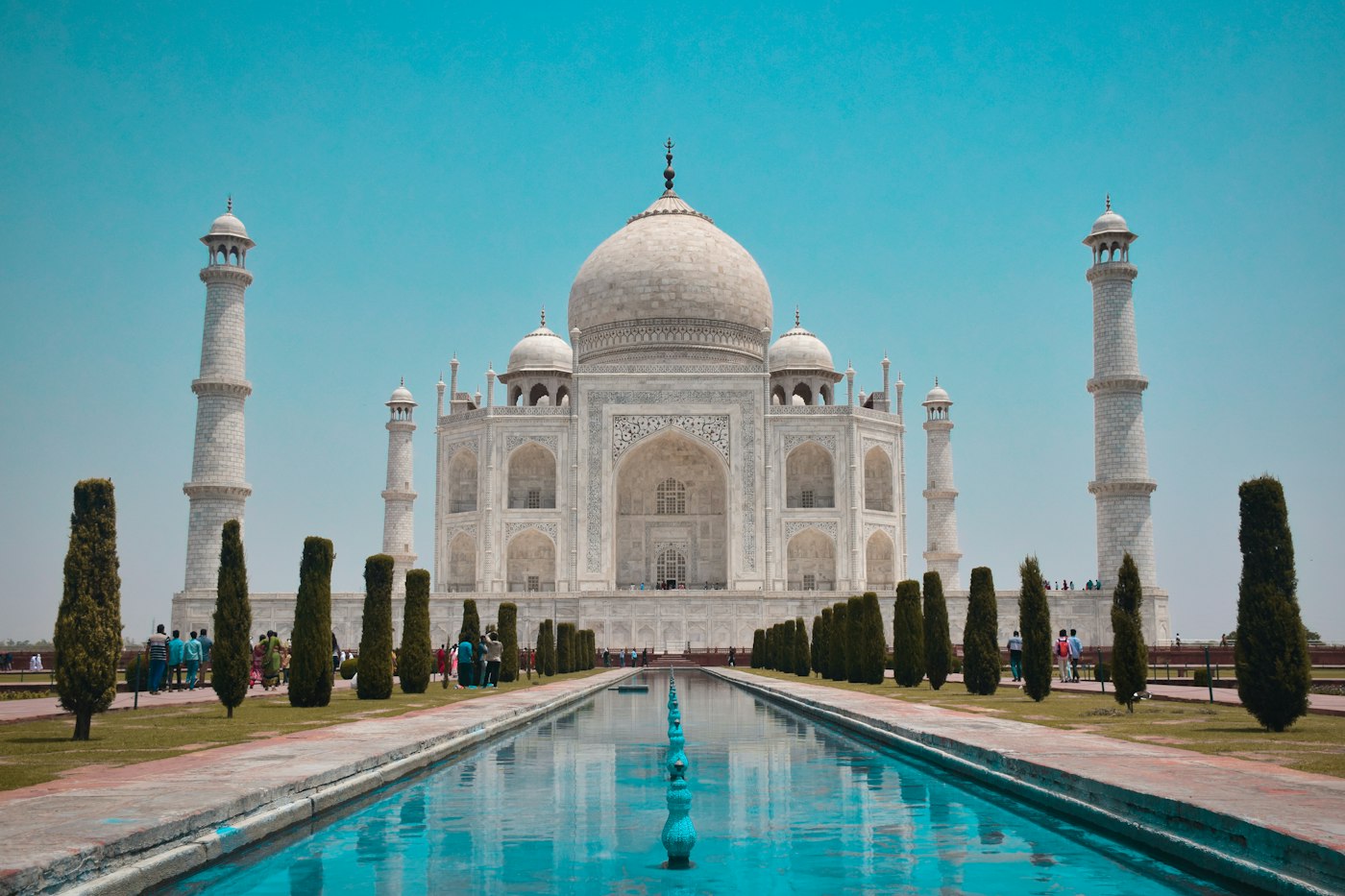
The first view of the Taj Mahal is powerful partly because it is so familiar. Long before arriving in Agra, most travellers have seen the white dome framed by a gateway or reflected along the garden axis. Visiting in person offers something photographs cannot supply: the changing sense of scale as you walk closer, the texture of the stone and the relationship between the monument and its surroundings.
A rewarding visit needs less rushing and more looking. Give yourself time to understand the layout, pause at details and move with the flow of other visitors. The goal is not to reproduce every famous photograph, but to notice what makes the place compelling from your own viewpoint.
Set the practical plan first
Check the official Taj Mahal visitor website for current entry arrangements before booking transport. The monument is closed to general tourist visits on Fridays, so place the visit carefully within your Agra itinerary. Entry conditions and ticket categories should be checked through official channels rather than copied from an old travel post.
Leave a buffer for the approach, security checks and finding the correct entrance. Travel with a light bag and review the official dos and don’ts before packing camera equipment. Reducing what you carry often makes the morning more comfortable than trying to bring a full kit for every possible photograph.
Read the architecture as you walk
Begin with the broad arrangement: the gateway, the long approach and the central mausoleum. Notice how the visual balance changes as you move away from the main axis. A view from slightly to one side can make the relationship between the dome and minarets easier to appreciate than a crowded straight-on photograph.
Then switch your attention to a smaller scale. Look for the contrast between calligraphy, floral ornament and larger areas of pale stone. You do not need specialist knowledge to enjoy these details. Comparing a wide view with a close observation is a useful way to understand how a monumental building is also made of carefully considered surfaces.
Work with the light you find
Early light can be appealing, but haze, cloud and visibility are never guaranteed. A misty day may soften distant outlines; a clearer day may make contrasts more pronounced. Rather than judging the visit against a photograph seen online, adapt to the conditions. Sometimes a close detail works better than a wide landscape.
For a short travel sequence, make one establishing frame, one view that includes the garden approach and two or three details. Check that bright marble has not lost all texture in your exposure. Wait briefly for space without obstructing others, and be willing to leave a composition if it requires standing in a busy route.
Keep photography within the rules
Photography is prohibited inside the main mausoleum according to the official visitor guidance. Follow signs and staff instructions throughout the complex, including any additional restrictions on equipment or specific areas. A photograph is never worth disrupting a place that has cultural and funerary significance.
Do not assume that a commercial shoot, tripod or drone is allowed because a phone camera is permitted elsewhere. Check requirements separately when planning professional work. For an ordinary visit, a small, manageable setup leaves you freer to look around and reduces the time spent handling equipment.
Leave time for the wider Agra story
If you are staying longer, consider a separate heritage visit rather than stacking several major monuments into one exhausting day. Agra Fort can provide a different architectural and historical perspective, while a permitted viewpoint across the river offers another way to understand the Taj’s setting. Confirm access before travelling to any particular spot.
Avoid building your plan around informal river access or a promised boat photograph. Conditions and permissions can change, and an attractive image online does not establish that an activity is available or authorised during your visit. A straightforward plan with reliable entry arrangements is easier to enjoy.
A small checklist for a better visit
- Confirm the day, entry arrangements and ticket category through the official website.
- Read the prohibited-items guidance before leaving your accommodation.
- Keep a meeting point and return transport plan for your group.
- Allow breaks suited to the weather and everyone’s walking needs.
- Put the camera away for part of the visit and look at the building without a screen.
The Taj Mahal rewards that last choice. Its most memorable quality may be a detail you did not arrive intending to photograph.