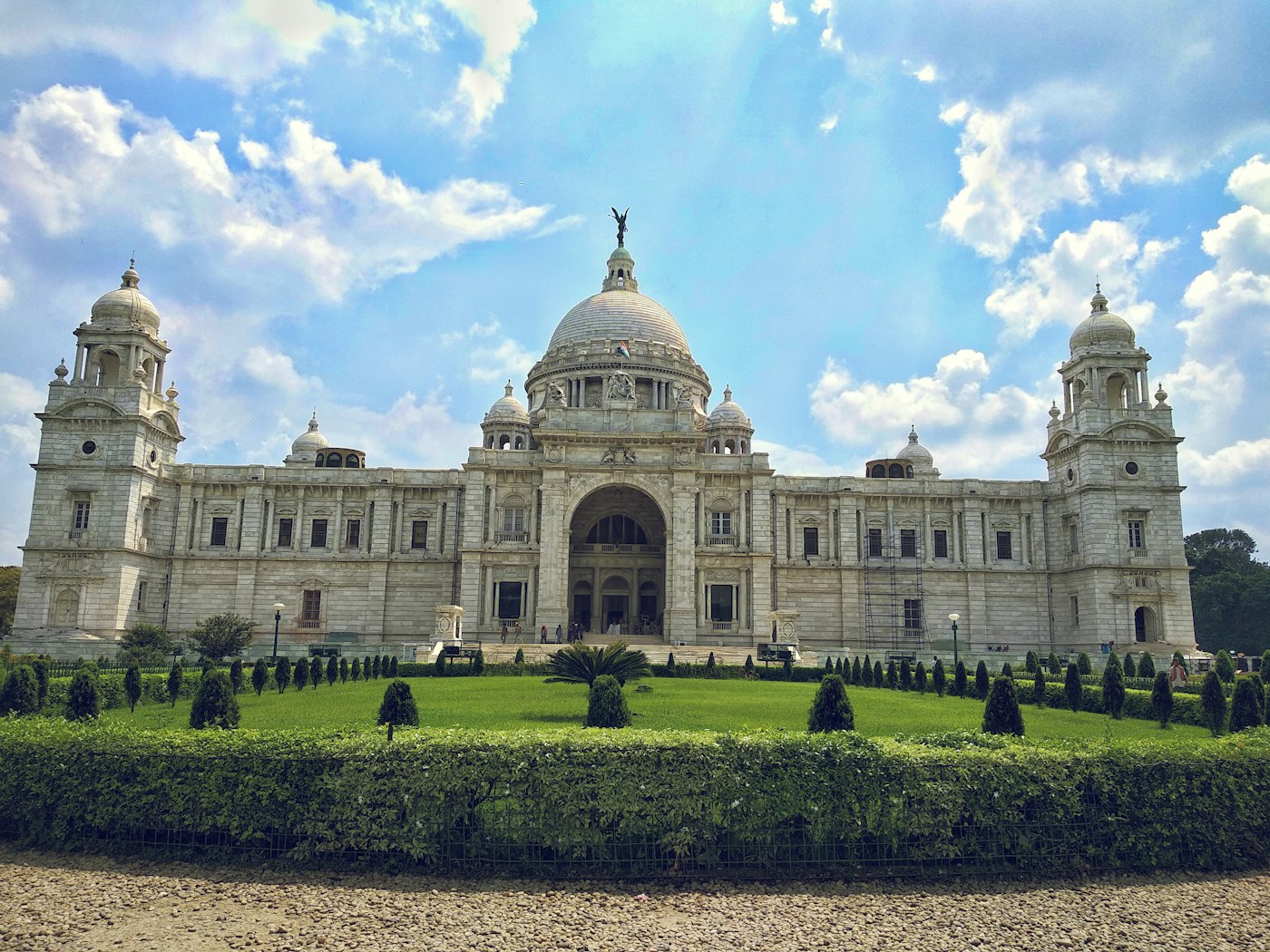
Victoria Memorial is a place to slow down in a city that rarely does. Across its lawns, the white marble building appears almost theatrical: a central dome, balanced wings and a skyline that changes with the light. Yet a rewarding visit goes beyond finding the familiar postcard angle. The museum and the grounds offer two different ways to understand this part of Kolkata, and both deserve room in your plan.
Understand the place before you arrive
Victoria Memorial is a museum and public cultural institution, rather than a former royal residence. Its origins lie in the memorial project proposed after Queen Victoria’s death in 1901. That colonial context matters: the building can be admired as architecture while its objects and displays are read critically, with attention to whose stories they tell. The institution’s own history and museum overview provide useful starting points.
Before entering a gallery, choose a question to carry through the visit. How was Kolkata represented in paintings? What does a map reveal about the growth of the city? How do official portraits differ from scenes of everyday life? A small focus makes a large collection feel more approachable, especially if you are travelling with people whose interests differ.
Give the gardens their own time
Treat the grounds as part of the experience. Start with a wide view of the building, then take a permitted path away from the busiest approach. The shift in angle reveals how the dome, trees and water balance one another. The Memorial’s garden information is helpful for understanding this designed landscape.
Do not plan your whole visit around a reflection photograph. Wind, water levels, maintenance and access can change the scene. Look instead for a composition that works with what is in front of you: a tree framing the dome, a quiet path leading towards the façade, or a close view of a sculptural detail. Stay on visitor paths and leave planted areas undisturbed.
Build a relaxed half-day plan
A useful approach is to separate the visit into three unhurried parts: an initial walk outside, a focused museum visit and a final pause in the grounds. Allow extra time for security, tickets and walking between entrances. Travellers who enjoy reading display labels should resist adding several other museums to the same afternoon.
Check the official website shortly before you travel for opening arrangements, ticket categories and current exhibitions. Do not assume that garden access and museum entry share the same ticket or schedule. Save your return meeting point on your phone, particularly if members of your group want to explore at different speeds.
Photograph light, scale and detail
Begin with an establishing photograph that shows the entire building. Follow it with a medium view of an entrance or colonnade, then a close detail. This simple sequence gives a travel album variety and helps a short video tell a clearer story. If the sky is very bright, expose carefully for the marble so that its surface retains detail.
Soft light can make the façade easier to photograph, but no particular hour guarantees an empty frame. Wait briefly for a gap in the crowd without blocking a path. Indoors, read the photography notices before taking out a camera; permission to carry equipment does not automatically mean that every gallery allows its use.
Keep the day comfortable
- Pack lightly: A compact day bag makes security and gallery walking easier.
- Plan for the weather: Bring sun protection or rain cover according to the forecast, and use sheltered breaks when needed.
- Discuss walking needs: Ask the venue about current access arrangements if stairs or long distances are difficult for someone in your group.
- Leave a buffer: Keep the next booking flexible enough that a queue does not turn the visit into a rush.
Take a second look before leaving
Return to one viewpoint you noticed on arrival. After seeing the galleries, the same building may read differently: less as a standalone attraction and more as a place where art, power and the city’s memory intersect. That second look is often what makes a heritage visit memorable. Leave with a few images and observations you can explain, rather than a camera roll of identical views.