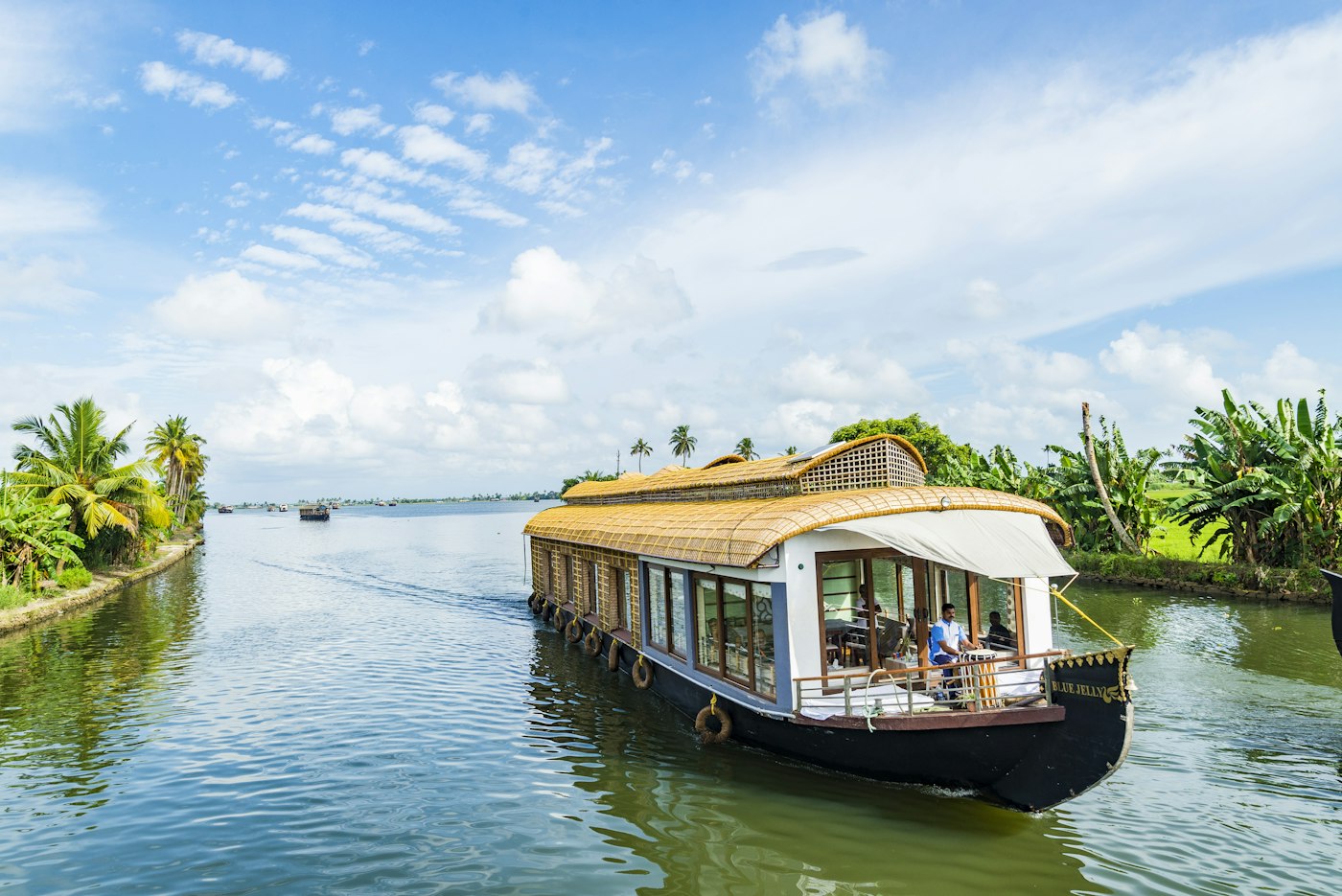
A backwater trip in Alappuzha works best when the water sets the pace. Wide stretches of lake give way to narrower channels, palms line the banks, and boats share space with the everyday journeys of local residents. The appeal is not a checklist of attractions. It is the chance to spend a few hours noticing a landscape that feels different when you move through it slowly.
Alappuzha is also commonly called Alleppey. When searching for transport or accommodation, try both names, but confirm the actual boarding location with your operator. A listing described as an Alappuzha cruise may depart from a jetty outside the part of town where you are staying.
Choose the right kind of boat experience
An overnight houseboat suits travellers who want their accommodation to be part of the trip. A shorter cruise can be a better fit if you prefer sleeping on land, are travelling with a tightly scheduled group, or simply want a first introduction to the waterways. Neither option is automatically more authentic; the route, crew and pace matter more than the label.
Kerala Tourism describes modern houseboats as an adaptation of the traditional kettuvallam and lists a DTPC houseboat booking counter in Alappuzha. Its houseboat guide is a useful reference before comparing commercial offers. Avoid assuming that all boats have the same construction, facilities or cruising hours.
Ask questions before paying
The most useful booking conversation is specific. Ask for photographs of the actual boat, the planned route, the boarding point and an explanation of what happens if weather affects the trip. A room count tells you little about privacy, ventilation or the amount of shared space. Confirm whether your booking is private or shared and how many passengers will be on board.
- Meals: Confirm the menu, drinking water and any dietary requirements in writing.
- Cabin comfort: Ask when air conditioning operates and whether windows have insect screens.
- Time on the water: Separate cruising time from time moored at the overnight stop.
- Transfers: Check whether the price includes getting to the jetty and returning afterwards.
- Changes: Read the cancellation terms and ask how route substitutions are handled.
Plan a day with breathing room
For an overnight trip, arrive near the boarding area with enough time to find your boat without rushing. Keep essentials in a small bag so you can settle in before opening larger luggage. Spend the first part of the cruise outside in the shade, then leave time for a meal and an unplanned pause rather than filming continuously.
If you choose a shorter outing, avoid pairing it with a distant onward connection on the same tight schedule. Boat travel, road transfers and boarding arrangements each need a buffer. A second night on land can make the trip more relaxed and give you room to explore the town without carrying your bags everywhere.
Look closely without intruding
These waterways are lived-in places. A boat passing a house does not create permission to photograph the people at its doorstep. Ask before taking identifiable portraits, keep conversations with your crew respectful and resist treating residents’ routines as a performance. A wider view of the canal often tells the story without invading anyone’s privacy.
For photographs, alternate between the larger landscape and small details: ripples against a hull, a reflection beneath a palm, or the changing colour of the sky. Keep cameras and phones secure. Do not lean out for a shot or move into working areas of the boat without the crew’s agreement.
Travel lightly on the backwaters
Choose an operator willing to explain waste handling and basic passenger safety. Ask where life jackets are kept and how to use them. Follow crew instructions, supervise children and avoid throwing anything into the water, including food. The quality of the experience depends on the health of the same waterways that support local communities.
Carry reusable essentials, take your rubbish ashore through the proper disposal route and be considerate about noise when moored near homes. These small decisions are part of travelling well, rather than extras to remember at the end.
Before you confirm the trip
Review the forecast and reconfirm your departure details shortly before travel. Use Kerala Tourism’s Alappuzha cruise information alongside direct questions to the operator. Choose a trip that fits your comfort and interests, then give yourself permission to put the camera down. Sometimes the most lasting part of a backwater journey is simply watching the shore pass.